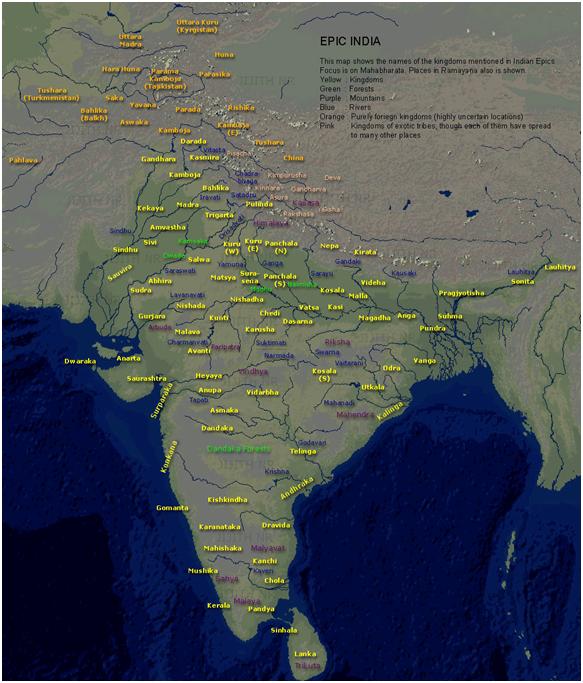
Mahabharata is a great resource for learning on topics like spirituality, Management, Psychology, Geography, Economics, politics, etc. Here I will be covering few topics related to management lessons from mahabharata

A Daitya (demon) named Ilwala and his brother Vatapi inhabited Manimati in ancient times. One day, Ilwala requested a Brahmana sage to grant him a son equal in prowess to Indra. The Brahmana refused, which enraged Ilwala, and from that day, he swore vengeance against the Brahmanas. Using his magical powers, Ilwala would transform his brother Vatapi into a ram, prepare the ram’s meat, and serve it to unsuspecting Brahmanas. After they had eaten, Ilwala would summon Vatapi back, who would then tear through the body of the Brahmana, killing him instantly. Many innocent sages lost their lives in this way. This gruesome scheme continued for a long time until the revered sage, Agastya, renowned for his wisdom and strength, intervened.

Agastya, deeply troubled by his ancestors’ plight—hanging upside down in a pit because of lack of progeny—resolved to find a wife and beget a son to free them from their suffering. He created a beautiful maiden from the choicest qualities of various beings and named her Lopamudra. He gave her to the king of Vidarbha, who was undergoing penance for a child, to be raised as his daughter. Lopamudra grew up to be a stunning and virtuous princess, and when she came of age, Agastya approached her father to ask for her hand in marriage. Though the king and queen were reluctant, fearing the sage’s ascetic lifestyle, Lopamudra herself reassured them and agreed to marry Agastya. Leaving behind her royal life, she adapted to the austere lifestyle of the sage. After some time, Lopamudra expressed her desire for a life that resembled the comforts of her royal upbringing, at least momentarily, before they could conceive a child. Agastya, respecting her wishes, sought wealth.

Agastya approached several kings for help, but each of them explained they could not spare any wealth without disrupting their balanced economy. Finally, they all approached the Asura Ilwala, known for his immense wealth. When Agastya arrived at Ilwala’s abode, the Asura welcomed them and served them his usual deadly meal—meat prepared from Vatapi. But Agastya, being the wise sage he was, ate the entire meal and digested it, preventing Vatapi from re-emerging. When Ilwala called out to his brother, only a rumbling sound emerged from Agastya’s stomach. Agastya laughed and told Ilwala that he had digested his brother forever. Horrified and defeated, Ilwala realized Agastya’s true power and agreed to give him all the wealth he desired—ten thousand cows and twice as many gold coins for Agastya, along with a golden chariot and two swift horses.

Agastya returned to his hermitage with the wealth and fulfilled all of Lopamudra’s wishes. Satisfied, Lopamudra then requested Agastya to bless her with a son who would possess immense energy and wisdom. Agastya gave her a choice—whether to have a thousand ordinary sons, a hundred powerful sons, or one son as powerful as a thousand. Lopamudra chose the last option, saying that one virtuous and capable child was better than many inferior ones. Thus, Agastya and Lopamudra bore a son, Dridhasyu, who was exceptionally learned and powerful from birth. He was a blessing not only to his parents but also to Agastya’s ancestors, who were finally released from their suffering.

This tale illustrates many profound life lessons:

The Consequence of Wrath and Revenge – Ilwala’s wrath against the Brahmanas turned him into a ruthless killer, leading to his eventual downfall. Holding onto anger and seeking revenge leads to self-destruction.

The Power of Wisdom Over Strength – Agastya’s wisdom and patience ultimately triumphed over the physical prowess of the Asura brothers, demonstrating the superiority of intellect over brute force.

The Importance of Duty to Family – Agastya’s determination to save his ancestors by having a son shows the value of fulfilling familial duties and responsibilities.

Respecting One’s Partner – Agastya’s respect for Lopamudra’s wishes, even when they seemed materialistic, highlights the importance of mutual respect and understanding in a relationship.

Choosing Quality Over Quantity – Lopamudra’s decision to have one powerful son instead of many ordinary ones teaches the importance of focusing on quality over quantity in all aspects of life, including one’s legacy.

The Ultimate Victory of Righteousness – Agastya’s unwavering adherence to righteousness, despite facing powerful opponents, ensured his success and safety, showcasing that good always prevails over evil in the end.

This story, with its blend of wisdom, family values, and the triumph of good over evil, offers timeless guidance on how to live a balanced and virtuous life.

The story of Nala and Damayanti is one of the most intricate love stories in the Mahabharata, filled with love, devotion, loss, and redemption. Here’s a more detailed retelling, covering additional points and nuances:

Nala’s Background and Qualities – Nala, the king of Nishadha, was a ruler known for his noble character, generosity, and skill as an excellent cook and a charioteer. He was well-versed in the Vedas and a true dharmatma (righteous soul). He also possessed a deep understanding of horses and chariots, which made him an exceptional charioteer. Nala’s self-control was renowned, and he was a warrior of great prowess, capable of facing any battlefield challenge.

Damayanti’s Beauty and Virtue – Damayanti, the princess of Vidarbha, was not just renowned for her ethereal beauty but also for her intelligence, virtue, and steadfastness. Damayanti, King Bhima’s beloved daughter, enjoyed a luxurious upbringing, but remained humble and wise. Her beauty allegedly captivated even deities.

Nala and Damayanti Fall in Love – The first meeting of Nala and Damayanti was not physical; they fell in love just by hearing about each other’s qualities through traveling messengers and bards. One day, Nala encountered a golden swan in his palace garden. As he was about to capture it, the swan spoke and pleaded for its release, promising that it would fly to Damayanti’s palace and sing praises of Nala’s virtues to her. Intrigued, Nala let the swan go. True to its word, the swan flew to Damayanti and praised Nala, speaking of his valour, good looks, and qualities as a just king. As the swan flew around, Damayanti, captivated by these descriptions, decided to marry Nala.

The Swayamvara and the Gods’ Interest – When the time came for Damayanti to marry, her father, King Bhima, arranged a Swayamvara. King Bhima invited princes and kings from all over, and news of this event reached the celestial realms. The gods Indra (King of the gods), Agni (God of Fire), Varuna (God of Water), and Yama (God of Death) became eager to have Damayanti as their wife. They decided to attend the Swayamvara themselves.On their way, they encountered Nala, who was also going to the Swayamvara. Realizing that Nala was Damayanti’s chosen suitor, they made a request: to be their messenger and plead their case to Damayanti. Though Nala was devastated, the gods compelled him to comply. He entered Damayanti’s chamber, and his presence there itself was a miracle because no mortal was allowed to enter the inner quarters of the princess.

Seeing Nala, Damayanti felt overwhelmed with joy. But when he conveyed the gods’ message, she firmly declared that she had chosen him alone and would marry no one else. Nala was moved but warned her that rejecting the gods could incur their wrath. However, Damayanti was unwavering and requested Nala to be present at the Swayamvara.

The Swayamvara and Damayanti’s Choice – When the day of the swayamvara arrived, Damayanti stepped into the grand hall, where she saw five identical Nalas. The gods, in their divine play, had transformed themselves to resemble Nala. This was a test of Damayanti’s love and determination. But Damayanti, with her deep love and intuition, noticed the subtle differences: Nala, unlike the gods, cast a shadow, perspired, and blinked. Moreover, she felt the unmistakable pull of her heart towards the real Nala.With grace and confidence, she placed the garland of marriage around Nala’s neck, choosing him as her husband. The gods, impressed by her devotion and courage, blessed the couple and left.

Marriage and Happiness – Nala and Damayanti were married with great splendour and returned to Nishadha, where they ruled happily for many years. Their life seemed like a dream, with mutual respect, love, and joy. His subjects loved Nala, a noble king, and Damayanti, a perfect queen, managed the palace with wisdom.

Kali’s Curse and Nala’s Downfall – Unknown to them, the shadow of Kali, the spirit of discord and evil, loomed over their happiness. Kali had also been a suitor at the swayamvara and had arrived late. Consumed with jealousy and anger, he swore to ruin Nala for marrying Damayanti. But because of Damayanti’s purity and Nala’s righteousness, he could not possess Nala immediately. He waited patiently for an opportunity to find a flaw in Nala’s character.

One day, Nala, in a moment of weakness, failed to wash his feet before performing his evening prayers. Kali saw this as his chance and entered Nala’s body, influencing his mind. Under Kali’s influence, Nala became obsessed with gambling. Nala started a dice game with his brother Pushkara, who was also possessed by Kali. Nala, once known for his self-control and wisdom, now lost his kingdom, his wealth, and everything he possessed in this disastrous game of dice. Damayanti, seeing her husband’s plight, tried to dissuade him, but Nala, unable to break free from Kali’s hold, continued to play and lose.

Exile and separation – Finally, Nala lost everything, including his kingdom. Pushkara, now the ruler, exiled Nala and Damayanti from Nishadha. The couple, reduced to wearing a single garment between them, wandered through the forest, penniless and hungry. Damayanti remained by Nala’s side; her love unshaken.One night, overcome with guilt and shame for dragging Damayanti into such a hardship, Nala decided to leave her while she was sleeping. He tore a piece of his garment and placed it beside her as a reminder. Heartbroken, he walked away.When Damayanti awoke, she found herself alone. Lost and devastated, she roamed the forests, braving wild animals and enduring pain. A caravan of merchants eventually found her, provided her with aid, and escorted her to her father’s kingdom of Vidarbha. King Bhima welcomed his daughter back and vowed to help her find Nala.

Nala’s Transformation – Meanwhile, Nala wandered deeper into the forest until he came upon a serpent trapped in a fire. Despite his own plight, Nala saved the serpent. To his surprise, the serpent revealed itself to be the powerful Naga king, Karkotaka. Grateful, Karkotaka bit Nala lightly, transforming his appearance into that of a small, dark-skinned dwarf named Bahuka.Karkotaka then advised Nala that this disguise would protect him from his enemies and urged him to go to Ayodhya and serve King Rituparna, a master of the dice game. Karkotaka also assured Nala that the venom would reduce Kali’s influence over his mind.

Service to King Rituparna – In his new form, Nala became Bahuka and offered his services to King Rituparna as a charioteer and cook. Nala’s culinary skills and charioteering were unmatched, but he hid his true identity and endured the life of a servant.Meanwhile, Damayanti, back in Vidarbha, heard rumours about a mysterious charioteer named Bahuka, whose cooking skills and mastery of horses reminded her of Nala. Suspicious, she devised a plan to confirm her suspicions.

The Reunion – Damayanti announced a second swayamvara, pretending that she would choose another husband. King Rituparna, eager to win the hand of such a beautiful woman, set out for Vidarbha with Bahuka as his charioteer. During the journey, Nala displayed such extraordinary skill in handling the horses that Damayanti’s suspicion grew stronger.When they reached Vidarbha, Damayanti arranged to meet Bahuka and tested him in various ways. She had him cook for her, knowing that only Nala could prepare food with such unique flavours. Finally, she confronted him, and Nala, overcome by emotion, revealed his true identity.

Return to Nishadha and Restoration – With his disguise removed, Nala was himself again. He purged Kali’s influence and regained his former strength and confidence. Determined to reclaim his kingdom, Nala challenged Pushkara to another game of dice. This time, with his acquired knowledge from King Rituparna, Nala won back everything he had lost.

He forgave Pushkara and welcomed him back with kindness, demonstrating his magnanimity. Nala and Damayanti, finally reunited, returned to Nishadha, where they ruled wisely and happily, their love strengthened by the trials they had endured.

Significance and Lessons – The tale of Nala and Damayanti is a timeless story of love, loyalty, and perseverance. Their relationship faced immense challenges, but both Nala and Damayanti showed resilience and devotion, emerging stronger and more united.

Lessons from the story of Nala and Damayanti

The story of Nala and Damayanti, as narrated in the Mahabharata, is not just a tale of love and loss, but a deeply philosophical and moral narrative filled with life lessons that resonate across cultures and times. Here are some of the key lessons we can draw from their journey:

1. Power of True Love and Devotion – Damayanti’s love for Nala was unwavering, even in the face of adversity. Her ability to recognize the real Nala at the swayamvara, when the gods tested her, demonstrated that true love transcends physical appearance and external disguise. Her devotion and loyalty to Nala did not waver, whether in his prosperity or poverty.This teaches us that genuine love is steadfast and based on deeper understanding, beyond superficial attraction.

2. The Dangers of Addiction and Weakness of Character – Nala’s downfall began with a momentary lapse in character, which gave Kali the opportunity to influence him. This led to his addiction to gambling, causing him to lose his kingdom, wealth, and even his family.The story highlights how a single weakness or indulgence can lead to destructive habits, bringing about disastrous consequences. It serves as a reminder to be vigilant against temptations that can erode one’s values and integrity.

3. The Importance of Self-Control and Resilience – Nala’s inability to stop gambling, even when he knew he was losing, shows how powerful negative habits can be once they take hold. However, despite the overwhelming consequences, Nala ultimately found the strength to rise above his weaknesses.Life may present situations where we face losses and failure, but the story teaches us the importance of regaining self-control, enduring adversity with patience, and working towards self-redemption.

4. The Role of Patience and Perseverance – Damayanti’s journey after being abandoned by Nala was marked by loneliness, pain, and danger, but she did not give up hope. Her patience and determination to find Nala eventually bore fruit.

Patience and perseverance are essential when life’s circumstances seem unfavourable. Just as Damayanti endured separation, hoping to reunite with her husband, we too must hold on to faith and continue our journey during difficult times.

5. The Value of Forgiveness – Nala, after recovering his kingdom, had every reason to seek revenge against his brother Pushkara, who had wronged him. Instead, he chose the higher path of forgiveness, inviting Pushkara back into his life.The story teaches us that harbouring hatred and seeking vengeance only perpetuates negativity. Forgiveness, on the other hand, is a sign of true strength and helps restore peace and harmony.

6. The Transience of Wealth and Power – Nala’s fall from being a prosperous king to a destitute wanderer shows how wealth and power are impermanent. Prosperity can turn into adversity at any moment.This serves as a reminder to remain humble and not become too attached to material wealth and success, as they are fleeting. We should instead focus on virtues and values that endure beyond circumstances.

7. The Importance of Righteousness and Integrity – Even when Nala lost everything, he never abandoned the path of righteousness. He did not reclaim his kingdom through force or deceit but waited until he could win it back honourably.Upholding one’s principles, even in adversity, is crucial. When we stay true to our values, the universe eventually supports us in reclaiming what is rightfully ours.

8. Understanding the Role of Fate and Free Will – Nala and Damayanti’s suffering resulted from the curse of Kali and the twists of fate, yet their efforts to overcome it through patience, resilience, and love also shaped their destiny.This story teaches us that while fate may bring challenges, our reactions, decisions, and perseverance determine the ultimate outcome. We cannot control fate, but we can control our responses and actions.

9. Adaptability and Reinventing Oneself – Nala’s transformation into Bahuka was both a curse and a blessing. As Bahuka, Nala did not lament his misfortune but adapted to his new role, mastering new skills such as cooking and learning from King Rituparna.When faced with drastic changes in life, it is vital to adapt, embrace new roles, and use setbacks as opportunities to learn and grow.

10. The Strength of Character in Adversity – Damayanti’s grace and strength, even when abandoned in the forest, illustrate the power of inner strength and the will to survive. She did not wallow in self-pity but took control of her destiny, reaching her father’s kingdom and devising a way to find Nala.

True character is revealed not in comfort, but in times of adversity. How we respond to challenges defines who we are and shapes our future.

11. Self-Redemption and Accepting Responsibility – Nala’s journey is ultimately one of self-redemption. He accepted responsibility for his downfall and took steps to rebuild himself, both physically (through his disguise as Bahuka) and mentally (by learning from his past mistakes).When we make mistakes, it is crucial to accept responsibility and take proactive steps toward self-improvement, rather than blaming others or circumstances.

12. Trust in the Power of Time and Patience – There is a verse in the story where Damayanti, in her despair, reminds herself that “Time does not spare anyone; neither grief nor joy stays forever.” Nala, too, during his trials, remembered the words of the sages that “time heals all wounds.”The story reminds us that all things, good or bad, are temporary. When faced with hardship, it is important to trust in the passage of time and remain patient, knowing that circumstances will eventually change.

Conclusion

The story of Nala and Damayanti is a complex tapestry of emotions, choices, and consequences. It teaches that life is a blend of joy and sorrow, success and failure, love and loss, but with the right mindset, one can navigate through even the most difficult situations. Their tale is ultimately about the triumph of human spirit over adversity, making it timelessly relevant and inspiring.

The gods and Gandharva’s, understanding Indra’s wishes, rushed to prepare a ceremonial welcome for Arjuna. They presented him with the Arghya (a ceremonial offering), washed his feet and face, and ushered him into Indra’s palace. Thus honoured, Arjuna lived in his father’s celestial abode, learning various divine weapons and the knowledge to withdraw them. Indra gave him his most powerful weapon, the thunderbolt, along with other tremendously powerful weapons, such as the heaven’s lightning bolts, whose presence the peacocks’ dance and the clouds’ flashes revealed. Although Arjuna was pleased to be in heaven, surrounded by comfort and luxury, he often thought of his brothers. Nevertheless, at Indra’s behest, he stayed for five years, mastering his divine skills.

After some time, when Arjuna had gained all the celestial weapons, Indra addressed him, saying, “O son of Kunti, learn music and dance from Chitrasena, for it will be beneficial for you. The art forms practiced in heaven are unlike those in the mortal world. Let Chitrasena become your friend and guide.” Obeying Indra, Chitrasena taught Arjuna the art of music and dance, both vocal and instrumental. However, despite acquiring these skills, Arjuna’s mind remained restless, haunted by memories of the deceitful dice game of Shakuni, the insults hurled by Dushasana, and thoughts of retribution. When his friendship with Chitrasena deepened, he further delved into the unparalleled arts of the Gandharvas, learning various styles of music and dance. But even after mastering these celestial arts, his mind found no peace, as he longed to reunite with his brothers and his mother, Kunti.

One day, Indra noticed Arjuna’s lingering gaze upon the celestial nymph Urvashi. Indra summoned Chitrasena and said, “O king of the Gandharvas, I am pleased with Arjuna. Go to Urvashi, the foremost of Apsaras, and ask her to be with Arjuna. Tell her, ‘Through my guidance, Arjuna has mastered weapons and arts that are revered by all. Now, it is time for him to learn the art of love. Please instruct him on this, as it will benefit him.’” Following Indra’s command, Chitrasena went to Urvashi and conveyed Indra’s message. Recognizing Chitrasena and warmly welcoming him, Urvashi respectfully accepted Indra’s words.

The prospect delighted Urvashi, the embodiment of beauty and grace,. She replied with a smile, “Having heard the virtues described by you, I would choose anyone possessing such qualities as my lover. Why, then, should I not choose Arjuna, who embodies th

em all? Out of respect for Indra’s command and your friendship, I already find myself under the sway of love for Arjuna. I shall go to him at once.”

After Chitrasena departed, Urvashi, her heart filled with a desire for Arjuna, diligently prepared herself. She adorned herself with beautiful ornaments and fragrant garlands. Her mind, captivated by thoughts of Arjuna, envisioned being with him. When night fell and the moonlight bathed the heavens, she set out for Arjuna’s mansion. With her every step, her elegance and beauty enchanted the onlookers in heaven. Her movements, graceful and fluid, seemed to challenge even the moon. Her radiant face, the sway of her hips, the elegance of her attire—all made her appear as if she were nature’s masterpiece. Intoxicated and overcome with desire, she moved like a celestial being, personifying beauty itself.

She reached the gates of Arjuna’s mansion and sent word through the attendant. Upon receiving permission, she entered the opulent palace. However, when Arjuna saw Urvashi standing before him in his chamber at night, his heart filled with trepidation. He closed his eyes and bowed his head out of modesty. “O revered lady,” Arjuna said, “I offer you my respects by bowing down to you. Inform me how I may assist you. I am here to serve you.” Urvashi, her senses reeling with desire, spoke passionately, “O noble one, Indra has sent me to you. He and Chitrasena desire I guide you in the art of love. You looked at me in that assembly with longing eyes, and my heart has been drawn to you ever since. Do not turn me away.”

But Arjuna, closing his ears in modesty, replied, “O blessed one, fie on my ears that they have to listen to such words from you! You are like a mother to me, as revered as Kunti or Sachi, the queen of Indra. I hold you in the same regard as them. Please, noble lady, do not speak to me in this manner. I looked at you with admiration, thinking that this noble lady must be akin to the mother of the Kaurava race. You deserve my reverence, not desire. I bow to you as a son would bow to his mother.”

Hearing these words, Urvashi trembled in anger. Her beautiful face contorted with rage, she cursed Arjuna, “Since you disregard a woman who has come to your chambers of her own accord, burning with desire, you shall have to live as a eunuch, a dancer among women, deprived of manhood and mocked as one unworthy of love.” Distressed, Arjuna went to Chitrasena and narrated the entire incident, his heart heavy with the burden of the curse. Chitrasena, worried, went to Indra and informed him of everything that had transpired.

Indra, summoning Arjuna, consoled him. “Son, Urvashi’s curse should not trouble you.” It shall serve you well in the future. When you and your brothers must live incognito during your thirteenth year of exile, this curse will allow you to remain unnoticed as a eunuch. You will be safe, for no one will recognize you. Afterward, you shall regain your strength and manhood.” Thus, reassured by Indra, Arjuna felt relieved and ceased to worry about Urvashi’s curse. He continued to enjoy his time in heaven, learning arts and skills from the Gandharva Chitrasena.

Lessons from Arjuna’s life in heaven

The story of Arjuna receiving celestial weapons and then being cursed by Urvashi in heaven presents several profound lessons about morality, self-control, and destiny. These themes are woven into the narrative through the interactions between divine beings and a mortal hero like Arjuna. This experience provides vital life lessons.

1. The Importance of Self-Control and Moral Integrity – Despite being approached by Urvashi, a divine nymph renowned for her beauty, Arjuna shows remarkable self-control. He honours her as a motherly figure rather than succumb to passion. This teaches us the value of upholding moral principles, even in tempting situations.Arjuna’s ability to remain steadfast to his values, even when urged by Indra, showcases the strength of character. He adheres to his sense of propriety, a testament to his disciplined nature.

2. Seeing the Bigger Picture – Urvashi’s curse, though initially seen as a setback, turns out to be a blessing in disguise. It becomes instrumental in allowing Arjuna to remain incognito during the Pandavas’ exile.This episode teaches that what appears as misfortune can sometimes be a precursor to future advantages. It’s essential to trust in the unfolding of events and understand that setbacks can be stepping stones toward future success.

3. The Role of Destiny – Even divine beings like Indra are aware of the grand narrative of destiny. Indra’s consolation to Arjuna—that Urvashi’s curse will benefit him in the future—illustrates the idea that every experience is part of a greater plan.Arjuna’s acceptance of this turn of events without resistance shows his faith in the larger cosmic design. This acceptance of destiny is a key element of the Mahabharata, where personal will and destiny frequently intersect.

4. The Complexity of Human Emotions and Responses – Urvashi’s reaction to Arjuna’s refusal is a reminder of the complexity of human (or even divine) emotions. Her feelings of attraction turn into rage and result in a curse. This teaches us to be mindful of our emotions and reactions.It also shows that even when one is justified in their response, others may react negatively out of hurt or ego. Navigating such situations requires wisdom and patience.

5. Humility in the Face of Honor – Arjuna remains humble when others shower him with gifts, honour, and celestial weapons. He continues to serve his teachers with respect and obeys their guidance.This humility, despite possessing immense power and skills, is a reminder that true greatness lies in not letting achievements inflate one’s ego.

6. Learning Beyond One’s Comfort Zone – Indra asks Arjuna to learn music and dance from Chitrasena, skills that might seem unnecessary for a warrior. But these arts become crucial during the Pandavas’ exile.This lesson signifies the importance of acquiring diverse skills and knowledge, even if they don’t immediately seem relevant. One never knows when and how they might become valuable.

7. Adapting to Roles and Situations – As part of his destiny, Arjuna has to live as a eunuch during the thirteenth year of exile. Rather than resist, he accepts it as a necessary phase of his journey.This adaptability is a lesson in accepting different roles in life without losing sight of the larger goal. Sometimes, adopting an unconventional path is essential to achieve one’s objectives.

8. Respecting Boundaries and Relationships – Arjuna’s respectful treatment of Urvashi, despite her advances, shows the importance of setting clear boundaries. He sees her as a mother figure and remains firm in his perspective.This respect for relationships and understanding the sanctity of certain bonds is crucial in maintaining harmony, both socially and in one’s life.

9. The Power of Restraint – In a place like heaven, where indulgences abound, Arjuna’s restraint stands out. He does not lose himself in the luxury and pleasures of the celestial realm. Instead, his mind is constantly with his brothers and mother.This focus, and the ability to avoid distractions, is essential for achieving long-term goals.

10. Finding Purpose Beyond Skills – Despite mastering divine weapons and learning celestial arts, Arjuna feels restless because his true purpose is to serve and reunite with his family.This teaches that external accomplishments and skills are secondary to one’s inner sense of purpose and duty. Fulfilment comes from aligning one’s actions with one’s deeper calling.

In essence, this episode from Arjuna’s life highlights the complexities of virtue, discipline, and destiny, urging us to maintain our values, stay focused, and embrace life’s twists and turns as part of a larger, purposeful journey.

Bhima was upset and angry and approached Yudhishthira and said, “Why are we living like this, hiding in the forest, without our kingdom or any happiness? Duryodhana unfairly took our kingdom through cheating, not through honesty or power. It’s like a weak jackal stealing food from mighty lions. Why are you so focused on keeping your word and suffering here, giving up everything that brings virtue and joy?

Despite Arjuna’s protection, our kingdom was stolen right before our eyes because of your excessive trust. We have lost everything and are now living in misery. I regret we didn’t kill the sons of Dhritarashtra when we had the chance. Powerful individuals like you would never choose a life of exile in the forest; only the weak would accept it. This lifestyle isn’t approved by Krishna, Arjuna, Abhimanyu, the Srinjayas, or me. Crying about ‘Religion! Religion!’ isn’t manly. Cowards lose hope and give up when they can’t reclaim what’s theirs. You have strength and vision. You just don’t feel this pain because you’ve chosen a path of peace. The sons of Dhritarashtra see us as weak, and that hurts me more than dying in battle. It’s better to die fighting than to live in shameful exile. If we fight and die, we’ll go to heaven, but if we win, we’ll regain our kingdom and honour.

We follow the customs of our warrior class. For us, it’s our duty to seek revenge and restore our kingdom. If we fight and people hear of our bravery, we’ll be remembered for our courage, not for living in hiding. A virtue that causes pain to yourself and your friends is not true virtue; it’s a vice that leads to suffering. Virtue, wealth, and pleasure must be balanced for a good life. If you chase one and ignore the others, life falls apart. You need all three to find happiness. Pleasure comes from wealth, and wealth can help you practice virtue. Just as the ocean and clouds do, they depend on each other. Why endure this, forfeiting all, knowing the truth?

Yudhishthira, think carefully and decide whether you want virtue, wealth, or pleasure. Then act decisively, because a wavering person lives a miserable life. It’s known that you live by virtue, and that’s why we’re urging you to act. Gifts, respect, and honesty are the highest virtues, but these require wealth to practice. A wise man is helpless in the absence of wealth. Begging isn’t acceptable conduct for a Kshatriya. Strength and power are the virtues of a warrior. Fight for your kingdom, destroy your enemies, and reclaim what’s yours with Arjuna and me by your side. Wise people use their resources wisely and overcome their enemies through strength and strategy.

Like the gods defeated the Asuras through clever tactics, we must use all means to win. Even if our enemies are strong, we can defeat them if we act courageously and strategically. Begging and weakness define not your life. Lead like a king, strike like a warrior, and regain our lost kingdom. True kingship isn’t about sitting quietly; it’s about using strength and strategy to protect and expand your rule. Don’t let this suffering continue. Set out for Hastinapura today, surrounded by your brothers and warriors, like Indra, surrounded by the Maruthas. Crush your enemies with Arjuna’s arrows and my mace. There is no one who can stand against us when we fight with our full strength. With the help of the Srinjayas, Kaikeyas, and Krishna, we can reclaim what is rightfully ours. Let’s strive to win back our land and glory, and bring an end to this exile.”

Lessons from Bhima’s Advice

Bhima’s advice to Yudhishthira carries several important lessons, especially on leadership, courage, balance, and the use of power. Here are the important points:

1. Balance of Virtue, Wealth, and Pleasure – Bhima emphasizes that a good life requires a balance between virtue, wealth, and pleasure. Ignoring one in pursuit of the others leads to an unbalanced and troubled life. Yudhishthira, by focusing solely on virtue, has sacrificed his wealth (kingdom) and pleasure (happiness and peace).

2. Importance of Action and Courage – Bhima criticizes Yudhishthira’s passive approach and emphasizes the need for decisive action. He advocates for courage and strength, especially when faced with injustice.Better to strive for justice, risking failure, than endure shameful defeat.

3. Strategic Thinking – Bhima highlights the importance of strategy and intelligence in leadership. Just as gods defeated the Asuras through clever tactics, leaders should use strategy to overcome challenges.Merely adhering to rules and morality isn’t enough; one must also adapt and think strategically to achieve long-term success.

4. Strength and Duty of a Leader – As a Kshatriya (warrior class), Yudhishthira’s duty is to protect his people and reclaim his kingdom. Bhima reminds him that strength and power are essential virtues of a leader.A true leader doesn’t retreat into hiding but faces challenges head-on to protect his people and uphold justice.

5. The Dangers of Blind Virtue – Blind adherence to virtue, without considering its impact on oneself and others, is harmful. Bhima argues that a virtue causing pain and suffering is not true virtue but a misguided approach.A leader should not sacrifice everything in the name of virtue if it leads to misery for his people and loved ones.

6. Reclaiming Lost Honor and Justice – Living in the forest, away from their rightful kingdom, is a sign of weakness in Bhima’s eyes. He urges Yudhishthira to reclaim their honour by fighting for what is rightfully theirs.Winning back the kingdom would restore not only their land but also their dignity and the respect of the people.

7. Leadership Requires Decisiveness – Bhima criticizes Yudhishthira’s indecisiveness and urges him to make a firm decision on their next steps. A leader should not waver or doubt, but must act boldly and confidently.

8. Use of Strength and Strategy in Battle – Power alone doesn’t win battles; a combination of strength and strategy is necessary. Bhima encourages the use of force when needed, along with smart tactics, to overcome stronger opponents.

9. Righteousness Includes Protecting One’s own – Bhima’s perspective is that righteousness isn’t just about keeping promises; it’s also about protecting one’s people and rights. A king’s duty is to safeguard his kingdom, even if it means resorting to war.

Bhima’s passionate words present a nuanced view of dharma and leadership, challenging the notion that non-violence and passivity are always the most virtuous paths. It encourages a more pragmatic approach to ethics and governance, balancing moral ideals with practical necessities. In essence, Bhima’s advice is a call for Yudhishthira to rethink his approach, embrace his role as a warrior king, and fight to restore their honour, kingdom, and duty as Kshatriyas.

Yudhishthira said, O Panchali, your speech is eloquent, smooth, and filled with beautiful expressions. We have listened to it, yet your words reflect a sense of disbelief in divine principles. I do not act for the sake of personal gain or the fruits of my actions. I give because it is my duty to give; I perform sacrifices because it is my duty to do so. As a householder, I fulfil my responsibilities diligently, regardless of the rewards they may bring. My actions are driven not by a desire to reap the benefits of virtue but by the wish to remain true to the Vedic teachings and follow the examples set by the wise. My heart naturally leans towards righteousness. A person who pursues virtue for its rewards is merely a trader of virtue. That behavior is ignoble and we should not count it among virtuous acts. Such a person will not attain the true fruits of their actions. Similarly, one who doubts the merit of their own righteous deeds forfeits the rewards because of their scepticism.

The Scriptures, which stand as the highest authority, affirm that one should never doubt virtue. Doubting virtue’s efficacy condemns a person to rebirth in lower life forms. Questioning religion, virtue, or the sages’ words prevents access to eternal bliss, just as the unworthy are denied the sacred scriptures. People regard a child born of a noble lineage who studies the Scriptures and behaves righteously as a sage, even in his youth. Conversely, a sinner who doubts righteousness and disregards the scriptures is considered lower than the unworthy and outlaws.

You have witnessed O Draupadi, the great ascetic Markandeya, who has achieved immortality in his physical form through virtue alone. Sage Vyasa, Vashistha, Maitreya, Narada, Lomasa, Suka, and others have all attained purity and divine wisdom through righteous conduct. You see them endowed with the power of penance, capable of bestowing curses or blessings, and exalted above even the gods themselves. These sages, who perceive the truths of the Scriptures, extol virtue as the highest duty. Thus, O beloved queen, you should neither doubt nor criticize divine law or virtuous acts.

The fool who doubts righteousness, relying only on his own limited reasoning, discredits the scriptures and regards the enlightened sages as mere madmen. Such a person sees only the superficial world that gratifies his senses, remaining blind to the deeper truths of existence. A doubter of religion finds no atonement for his sin and remains trapped in a cycle of anxiety, unable to attain bliss. One who slanders the Vedic teachings, driven by lust and greed, finds himself destined for hell. The one who embraces faith in righteousness achieves eternal peace and prosperity. Disregarding scripture and virtuous conduct ensures failure in this life and the next. For such a person, neither this world nor the other exists. Therefore, do not doubt, O Krishna, the ancient religion established by the wise and practiced by the righteous.

Righteousness is like a ship that conveys one to heaven, just as a sturdy vessel helps merchants cross the sea. Without virtuous actions, this universe would plunge into darkness, and humanity would descend into chaos. None would strive for salvation, pursue knowledge, or even seek wealth; instead, men would live like beasts.

If asceticism, celibacy, sacrifices, the study of the scriptures, charity, and honesty bore no fruits, then generation after generation would not have upheld these virtues. This would create confusion in the world. Why then do the Rishis, gods, Gandharvas, and Rakshasas—who are independent of human conditions—hold virtue in such high regard? Knowing for certain that the Supreme Being rewards virtuous deeds, they adhere to righteousness. This adherence is the eternal source of prosperity. When we observe the results of knowledge and asceticism, it is clear that both virtue and vice yield outcomes. Reflect on your own birth and the birth of Dhrishtadyumna, and you will see these are undeniable proofs of the fruits of virtue! Those who have mastered their desires, uphold vows, and have burnt away all impurities acquire pure minds filled with serenity, purity, and wisdom. They alone truly understand the nature of virtue and its fruits. Ordinary people, in contrast, remain ignorant of these mysteries, which even the gods have kept concealed.

Therefore, O Draupadi, even if you do not witness the immediate results of virtuous deeds, do not let your faith waver. Perform sacrifices with sincerity and practice charity with humility. All actions in this world have consequences, and righteousness is eternal. The Supreme Being himself conveyed this truth to his spiritual sons, as attested by Kashyapa. Dispel your doubts like mist before the sun. Embrace faith, for the universe is guided by the grace of the Supreme Being. Never disregard that eternal force through whose blessing’s mortal beings, by virtue alone, attain immortality.”

Lessons from Yudhishthira’s talk on Virtue

The passage offers several profound lessons on life, faith, and pursuing virtue. The important points include:

1. Duty Over Desire – Yudhishthira emphasizes performing one’s duties without being attached to the outcomes. The essence of true virtue lies in the act itself, not in the desire for its rewards. This mindset, known as Nishkama Karma, encourages focusing on actions driven by responsibility rather than expectations.

2. Virtue is a Way of Life – Virtue should be pursued for its own sake, not to gain something in return. Treating virtuous acts as transactions reduces their value, and such behaviour disqualifies one from being truly virtuous. This underscores that morality and ethics must be ingrained in one’s nature and should not be performed for external gains.

3. Faith in Divine Principles – Doubting the efficacy of virtue or divine principles can lead to spiritual downfall. Faith in the path of righteousness is essential, even when the results are not immediately visible. Scepticism and disbelief can erode one’s spiritual foundation and prevent progress.

4. Consequences of Doubt – Those who doubt the sacred teachings and righteous principles lose the opportunity for both worldly success and spiritual liberation. Yudhishthira compares such individuals to outlaws, lower even than those who disregard social norms.

5. Power of Righteousness – The passage highlights that great sages like Markandeya and Vyasa have achieved divine wisdom and power through a life dedicated to righteousness. This illustrates that the fruits of virtue are not always material but manifest as wisdom, purity, and spiritual power.

6. Religion and Virtue as Steadfast Guides – Yudhishthira compares righteousness to a ship that guides one safely through the tumultuous sea of life. When practiced with faith, it becomes the guiding force that leads to peace, prosperity, and eventual liberation.

7. Long-Term Consequences of Actions – Just because the results of virtue are not immediately visible does not mean they don’t exist. Yudhishthira suggests that righteousness yields eternal results that are beyond immediate perception. Patience and unwavering faith are required to see its true rewards.

8. Avoiding Arrogance and materialism – Those who act out of greed, lust, or pride, disregarding righteous conduct, are destined for suffering and turmoil. Such people live a life of anxiety, failing to attain both inner peace and external success. Humility, self-control, and faith are crucial virtues to cultivate.

9. Importance of Scriptures and Sages – The scriptures and the teachings of enlightened sages are highlighted as the highest sources of knowledge. Doubting them is akin to disrespecting wisdom itself. Yudhishthira advises that one should have reverence for these sources and align one’s life with their guidance.

10. Righteousness is eternal – The essence of the message is that righteousness is timeless and eternal. Even if not apparent, its impact is always present and guides the cosmos itself. True prosperity and success, both in this world and beyond, are rooted in steadfast adherence to virtue.

11. The Role of the Supreme Being – Yudhishthira acknowledges the role of the Supreme Being in rewarding virtuous deeds. He encourages faith in the divine order and stresses that one should never disregard the grace of the higher power through which all things manifest.

In summary, the passage teaches that faith in righteousness, performing duties without attachment, and maintaining a firm belief in the divine order are essential for a life of peace and prosperity. Virtue is its own reward, and doubting its efficacy leads to spiritual ruin.

Yudhishthira, with his calm wisdom, said, Anger can be both the destroyer and the creator of fortunes. Understand, dear one, that anger is the root of all prosperity and all adversity. He who restrains his anger gains prosperity, while one who is constantly driven by wrath courts only disaster. Anger leads to the ruin of every being in this world. How could I take part in such ruin?

An angry person commits grievous sins. In his rage, he may kill even his teachers and utter harsh words to those worthy of respect. An angry man loses his sense of right and wrong. No act is too heinous and no word too vile for a man consumed by anger. He might slay the innocent and spare the guilty. In his rage, he may even condemn his own soul to the realms of Yama (the lord of death). Seeing all these terrible consequences, the wise strive to master their anger, seeking the highest form of prosperity both in this world and in the next.

Reflect on this: one who refrains from retaliating against an angry adversary rescue not only himself but also his opponent from a great calamity. This individual heals both sides. But if a weaker man, overwhelmed by rage, stands against someone more powerful, he becomes the architect of his own ruin. For one who jeopardizes his own life, no virtuous realms await him after death. Thus, some say that a weak man should suppress his wrath.

Even a powerful man, when persecuted, should control his anger, for such restraint ensures his peace and prosperity in the other world. Therefore sages applaud those who conquer their wrath. True victory belongs to the honest and forgiving, for truth is superior to falsehood, and gentleness is nobler than cruelty.

The virtuous regard those as truly strong who only display anger as a façade. The truly powerful suppress their anger with wisdom. A wrathful person sees nothing clearly and respects no one. Blinded by rage, he kills even those who should not be slain. Therefore, those with true strength of character must always distance themselves from wrath. The man consumed by anger loses all noble qualities—generosity, dignity, courage, skill, and wisdom. In contrast, by rejecting anger, one can show true energy and act decisively at the right time. The ignorant mistake anger for strength, but wrath only brings about destruction. Those who wish to act rightly must abandon it.

If fools act rashly due to a lack of wisdom, how can I, knowing better, act in the same way? Were there no forgiving people in this world, there would be ceaseless strife and no peace. If those who suffer responded with vengeance, if those chastised by their superiors retaliated, if fathers struck at their sons and sons at their fathers, if husbands attacked wives and wives their husbands—what would become of humanity?

It is peace, O Draupadi, that ensures the continuity of life. Kings who succumb to anger quickly destroy their realms. It is because there are men as forgiving as the Earth that creatures flourish and prosper. Forgiveness defines life, thus, one must always forgive. The wise one who conquers his wrath, even when insulted or oppressed, is the true possessor of great strength. The powerful one who controls his anger will enjoy everlasting rewards, while the wrathful fool faces ruin both in this world and the next.

“Forgiveness is virtue; forgiveness is sacrifice; forgiveness is the Vedas; forgiveness is the Shruti. He who knows this can forgive everything. Forgiveness is Brahma; forgiveness is truth; forgiveness is ascetic merit; forgiveness guards’ future merit; forgiveness is asceticism; forgiveness is holiness; and it is by forgiveness that the universe is sustained.”

Those who are forgiving attain the highest regions that are the reward of those who perform great sacrifices, master the Vedas, or accumulate vast ascetic merit. While others may gain entry to different realms through their acts, the forgiving ones alone reach the exalted realms of Brahma. Forgiveness is the might of the mighty; it is the essence of sacrifice and the peace of the mind. How can I, therefore, renounce this virtue that embodies Brahma, truth, wisdom, and the very order of the universe? The wise always choose forgiveness, for it is the path to Brahma. Those who forgive inherit this world, and the next. Such man’s gain honour in this world and blessedness in the next. Thus, conquering their wrath elevates those to higher realms. Some say that forgiveness is the greatest virtue. Forgiveness and gentleness are the attributes of those who are truly self-possessed and represent eternal virtue. Therefore, I shall remain true to them.”

Lessons from Yudhishthira’s Reflections on Anger and Forgiveness

Anger Leads to Destruction – Anger can be both a destructive and constructive force, but more often than not, it leads to chaos and destruction. It blinds judgment, pushing people to commit wrongful acts that cause long-term harm.

Self-Control is True Strength – True strength lies not in giving in to anger but in controlling it. The ability to maintain one’s composure and suppress anger, even when provoked, is a sign of true inner strength and wisdom.

Forgiveness as a Virtue – Forgiveness is not a sign of weakness, but the highest form of strength and virtue. It leads to peace and harmony, not just for the forgiver, but also for those around them. It maintains the fabric of society and is essential for the continuation of life.

Anger Destroys Virtuous Qualities – A person consumed by anger loses essential qualities such as generosity, wisdom, and courage. Anger erodes one’s sense of right and wrong, causing them to act rashly and often harmfully.

Anger is Not True energy. People frequently confuse anger with power, however, true power means acting correctly, timeously. Only those who can suppress their anger can harness their energy effectively.

Peace Ensures Prosperity – The continuation of society and the flourishing of life depend on peace, not vengeance. Only by cultivating peace can one ensure the prosperity of themselves and others.

Forgiveness is the Foundation of the Universe – Forgiveness is the essence of many virtues such as sacrifice, asceticism, and holiness. It holds the universe together and allows it to thrive. It is the might of the mighty and the essence of genuine sacrifice.

Retaliation Leads to a Cycle of Destruction – Responding to injury or insults with vengeance leads to a never-ending cycle of strife and conflict. Forgiveness breaks this cycle and promotes peace and reconciliation.

Wisdom Lies in Forbearance – A wise person, even when insulted or oppressed, chooses forbearance over retaliation. Such forbearance elevates a person to the highest realms of virtue and honour.

Forgiveness is the Path to Divinity – Forgiveness is closely linked to divinity and is the path to attaining spiritual heights. It is through forgiveness that one aligns themselves with the highest virtues of truth, wisdom, and Brahma (the divine).

Society Needs Forgiveness to Function – Without forgiveness, there would be no stability or peace in society. A world without forgiveness would be chaotic, where vengeance and violence would prevail, breaking down all social order.

Forgiveness Over Revenge – While revenge might seem like a natural response, it only leads to greater harm. Choosing forgiveness opens the path to a harmonious and prosperous life, in this world and beyond.

Peaceful Leaders Foster Prosperity – Leaders who are driven by forgiveness and peace create a prosperous and stable kingdom, while those who yield to anger and vengeance cause destruction for themselves and their subjects.

Forgiveness Brings Everlasting Rewards – Those who conquer anger and embrace forgiveness earn everlasting rewards, both in this world and in the next. They achieve honour, respect, and ultimately spiritual liberation.

The Path to True Victory – True victory lies in conquering one’s own wrath, not in defeating others. Anger may bring momentary success but ultimately leads to self-destruction, while forgiveness brings long-lasting peace and fulfillment.

Key Takeaway – Yudhishthira’s perspective teaches us that anger is a destructive force, and those who truly wish to succeed must master the art of forgiveness. Forgiveness is the foundation of personal virtue, societal peace, and spiritual elevation. By embodying gentleness and patience, one aligns with eternal truths and builds a life of honour and prosperity.

In this narrative, Draupadi recounts the ancient story of a conversation between Prahlada, the wise chief of the Asuras and Danavas, and his grandson Vali, the son of Virochana. The tale offers a profound exploration of the balance between forgiveness and the exercise of strength.

One day, Vali approached his grandfather, Prahlada, seeking clarity. He asked, “O revered one, which is more meritorious—showing forgiveness or exerting might and energy? I am confused and desire your guidance. Please tell me which is the right path, and I will follow it.”

In response, Prahlada, who was well-versed in the science of duty, explained the complexities of the matter, pointing out that neither forgiveness nor strength is inherently superior in all situations. Instead, one must apply them judiciously based on context and circumstance.

The Merits and Demerits of Constant Forgiveness:

Drawbacks of Unconditional Forgiveness – Prahlada emphasized that, while forgiveness is a virtue, excessive leniency leads to many negative consequences. Servants, strangers, and enemies disregard and disrespect those who constantly forgive. They perceive such individuals as weak, leading to neglect, disobedience, and even exploitation.

Social Disregard and Personal Loss – Those who are always forgiving may find that people take advantage of their leniency. Servants might appropriate their belongings, disregard their orders, and fail to offer due respect. Such disregard worse than death, as it undermines one’s authority and position.

Moral Misjudgements – Constant forgiveness may lead others to believe that they can commit wrongs without consequences. Even loved ones and close associates may grow insolent and disrespectful, believing that no matter what they do, they will escape punishment.

The Perils of Unrestrained Anger and Might:

Isolation and Hatred – The man who constantly wields his might and punishes others—whether or not they deserve it—becomes isolated and is hated by both friends and foes. Such individuals face separation from loved ones and accumulate sorrow, confusion, and enemies.

Fear and Hostility – Those who use their power excessively inspire fear rather than respect. People are quick to turn against them when they find an opportunity, just as one would try to eliminate a dangerous snake that has entered their home.

Self-Destruction – A person who is quick to anger loses prosperity, friendships, and even his life. His actions, driven by unchecked wrath, bring about his downfall.

The Ideal Approach: Balance between Forgiveness and Strength

Prahlada advocates for a balanced approach. One should neither always forgive nor always resort to might. Instead, a wise person should judge each situation carefully, exercising strength when needed and showing forgiveness when it is justified. Prahlada then elaborates on when to forgive and when to punish:

Forgiveness should be shown to those who have served you in the past, even if they commit a grave wrong. Recalling their earlier loyalty and service, one should be compassionate.

Ignorance and folly should be pardoned because wisdom and knowledge are not easily accessible to all.

Deliberate wrongdoers who feign ignorance should never be pardoned, even if their offenses are minor, as it shows a lack of sincerity.

The initial offense is always pardoned, yet a subsequent one, even if minor, warrants punishment.

Accidental offenses require careful examination. Upon fair investigation, we should pardon those who make unintentional mistakes.

Humility as strength – Humility can achieve what brute strength cannot. Acting with humility can sometimes overcome greater obstacles, making it a powerful tool when used wisely.

Prahlada concludes by stating that one must act according to place and time, considering one’s own strength and the situation at hand. An endeavor pursued without regard to the appropriate time and place is bound to fail.

Draupadi’s Interpretation and Advice to Yudhishthira

After recounting this dialogue, Draupadi urges Yudhishthira to consider Prahlada’s counsel. She argues that the time for forgiveness has passed. The Kauravas have repeatedly harmed and disrespected the Pandavas. Showing leniency now would be seen as weakness, and it is time to assert strength.

She emphasizes that a true king uses both forgiveness and might as necessary, each according to the situation. Being humble and forgiving without discernment only invites further persecution. Draupadi’s message to Yudhishthira is clear: a leader must know when to show patience and when to take decisive action. This balanced approach will ensure justice and restore the honour and respect the Pandavas deserve.

Having faced great misfortune, the Pandava princes finally found a peaceful dwelling in the forest. In those woods, filled with towering Sala trees and nourished by the sacred Saraswati River, they, who were like celestial Indras in their glory, found solace and enjoy the beauty of nature. King Yudhishthira, the noble leader of the Kuru dynasty, sought to bring joy to the Yatis, Munis, and esteemed Brahmanas living in the forest by offering them the finest fruits and roots available.

Their priest, the learned Dhaumya, took on a fatherly role and performed the sacred rites of Ishti and Paitreya for the Pandavas during their exile. One day, the renowned sage Markandeya, a master of immense wisdom and boundless energy, visited the Pandavas’ humble abode in the forest. Yudhishthira, the mighty son of Dharma, welcomed the venerable sage with utmost respect, honouring him as one would honour the gods themselves.

Seeing Yudhishthira and Draupadi, along with Bhima and Arjuna among the ascetics, the sage Markandeya smiled gently, remembering a past event. Noticing this, Yudhishthira, feeling disheartened, asked, “O revered one, all these ascetics share in my sorrow and empathize with my plight. Why is it that only you smile, as though in happiness?”

Markandeya replied, “O child, my heart grieves for your situation; I do not smile out of joy. Instead, I recall the story of Rama, the son of King Dasaratha, who, despite being the embodiment of righteousness and strength, was also forced to endure exile in the forest because of his father’s command. Like you, he wandered the woods with his bow, accompanied by his brother Lakshmana and his wife Sita. Despite his strength and invincibility, he accepted his fate without question, fulfilling his duty.”

He continued, “Rama, a warrior of unmatched valour, roamed the forests, relinquishing the comforts of a king. Therefore, no one should ever act arrogantly boasting of their power. Many great kings like Nabhaga and Bhagiratha conquered the world through their adherence to truth and virtue, ultimately attaining celestial realms. Similarly, the virtuous king of Kasi and Karusha, despite his might, was ridiculed as a madman for renouncing his wealth and kingdom. No one should act unrighteously, claiming their strength as justification.”

“O son of Pritha,” Markandeya concluded, “just as the seven revered Rishis shine brightly in the heavens because of their adherence to divine laws, so must all creatures follow the path laid down by the Creator. Even mighty elephants, as large as mountain peaks and armed with formidable tusks, do not transgress the laws of nature. Likewise, every being follows the order set for them. Thus, one should never act unrighteously, claiming that power alone can justify their actions.”

“O king, you have surpassed all in truth, virtue, and humility. Your fame and strength are as radiant as the sun! Remain steadfast in your righteousness, for when this period of exile ends, you will reclaim your kingdom and prosperity from the Kauravas, not just through might, but through the brilliance of your virtues and unyielding resolve.”

After sharing these words of wisdom with Yudhishthira, who was surrounded by ascetics and friends, the great sage Markandeya paid his respects to Dhaumya and the Pandavas, and then departed northward, leaving them with renewed hope and strength.

Lessons from Rishi Markandeya’s Advice

Adversity Tests True Character – Like Yudhishthira, many great individuals throughout history have faced extreme hardships despite their strength and virtue. Sage Markandeya reminds us through the story of Lord Rama that even the righteous and powerful may endure suffering, but they must remain unwavering in their duty and principles.

Humility in Strength – The sage emphasizes that no one, however mighty, should act arrogantly or unrighteously because of their power. Real strength lies in humility, adhering to truth, and maintaining integrity, even in adverse circumstances. Boasting of one’s strength is futile if it does not align with dharma (righteousness).

Righteousness over Might – Sage Markandeya cites examples of great kings and beings who, despite their strength, adhered to moral and ethical paths, respecting the natural laws and principles established by the Creator. He teaches that might alone does not grant authority; only righteousness and adherence to duty provide true power and respect.

The Value of Duty and Patience – By comparing Yudhishthira’s situation to that of Lord Rama, who accepted his exile as a duty towards his father, Markandeya emphasizes that fulfilling one’s responsibilities with patience and steadfastness, even in challenging situations, leads to true victory.

Importance of Following Divine Order – The sage points out that all creatures, no matter their might—whether great kings or mighty elephants—follow the natural laws set by the Creator. This implies that one must align with the greater cosmic order and not deviate from the path of truth, even when faced with personal loss.

Resilience and Hope – Markandeya’s parting message to Yudhishthira is one of hope and resilience. He reassures him that his steadfast adherence to righteousness, truth, and virtue will ultimately bring about a just end, allowing him to reclaim his kingdom not through brute force, but through the radiance of his own qualities.

Leadership and Morality – For leaders, Markandeya’s advice serves as a reminder that true leadership is not about wielding power but about setting an example of moral conduct, humility, and the ability to endure difficulties with grace. Yudhishthira’s calmness, respect for sages, and dedication to duty despite his suffering exemplify the qualities of a noble leader.

Importance of Mentorship – Markandeya’s guidance shows the value of seeking wisdom from experienced and knowledgeable mentors.

Universal Principles – The sage’s teachings emphasize the universal principles of righteousness, truth, and virtue, applicable to all beings regardless of their strength or status.

Faith in Divine Justice – Markandeya’s words encourage Yudhishthira to have faith in divine justice, trusting that the universe will ultimately restore balance and righteousness.

In essence, the sage’s words teach that enduring hardships with unwavering commitment to righteousness, humility, and duty is the hallmark of true greatness, and such perseverance leads to ultimate victory and success.

When Lord Krishna spoke amidst the gathering of powerful kings, filled with anger, Draupadi, accompanied by Dhrishtadyumna and her valiant brothers, approached him, who was seated among his kin. With her voice trembling in fury, she sought refuge in the one who is known to protect all, and addressed Krishna, saying, Asita and Devala have proclaimed that you are the Supreme Creator, the sole Prajapati responsible for the birth of all beings. Jamadagnya has declared that you are Vishnu, the embodiment of Sacrifice, the Performer, and the one for whom sacrifices are made. The sages recognize you as Forgiveness and Truth, while Kashyap considers you the very Sacrifice born of Truth. Narada praises you as the lord of the Sadhyas and the Sivas, the one and only Creator and Master of all. You sport with Brahma, Shiva, and Indra as effortlessly as children play with their toys. O mighty-armed one, the sky is your head and the earth your feet; the worlds rest within you, and you are the Eternal One! You are the highest object of meditation for Rishis, who are sanctified by their asceticism and Vedic knowledge. You are the refuge of all virtuous rulers devoted to justice, those who never turn away from battle. You are the Omnipresent Lord, the Soul of all beings, and the force pervading everything. The heavens, the stars, the moon, and the sun are all established within you. O Supreme Lord, the morality of earthly creatures and the immortality of the universe are founded in you. You are the eternal protector of all, divine and mortal alike.

Therefore, O Krishna, impelled by your affection for me, I lay my griefs before you. How could they drag someone like me—the wife of the Pandavas, the sister of Dhrishtadyumna, and your friend—into the assembly? Alas! During my menstrual period, clad in a single garment and trembling with fear, they pulled me, weeping and humiliated, into the Kaurava hall. In front of those kings, stained with blood, the evil sons of Dhritarashtra laughed at me. How could they dare treat me as a slave while the sons of Pandu, the Pancalas, and the Vrishnis lived? Though I am, according to the scriptures, the daughter-in-law of both Dhritarashtra and Bhishma, they sought to enslave me by force. I blame the Pandavas, mighty warriors known across the world, for watching their own wife, known far and wide, suffer such abuse without intervention.

Oh, shame upon Bhima’s strength and the prowess of Arjuna’s Gandiva bow, for both stood as despicable men disgraced me! This eternal course of morality dictates that a husband, no matter how weak, should protect his wife. By protecting her, he safeguards his own self, for she is the bearer of his lineage. This is why a wife is called ‘Jaya’—the one through whom a man conquers. But the Pandavas, who never abandon those who seek their protection, abandoned me! I, who bore them five heroic sons—Prativindhya from Yudhishthira, Sutasoma from Bhima, Srutakirti from Arjuna, Satanika from Nakula, and Srutakarman from Sahadeva—all of whom are warriors of unmatched valour. It was for their sake, O Janardana, that I needed protection.

Just as you, O Krishna, protect your son Pradyumna, my sons are also mighty and unmatched in battle. How could they bear the insults heaped upon me by the wretched sons of Dhritarashtra? Deceived out of their kingdom and turned into bondsmen, the Pandavas, despite their immense strength, allowed me to be dragged into the court, dressed in a single cloth during my cycle. Oh, shame on Gandiva, which none but Arjuna, Bhima, and you, O Krishna, can wield!

Fie upon Bhima’s strength and Arjuna’s valour, for Duryodhana still breathes after such crimes. It was he who deceitfully drove the young Pandavas and their mother out of the kingdom. It was he who, driven by malice, mixed poison into Bhima’s food. But Bhima, with his mighty digestion, remained unharmed. It was Duryodhana who bound Bhima in sleep and threw him into the Ganges. Yet Bhima tore through his bonds and emerged from the waters unscathed. This same Duryodhana unleashed venomous cobras upon Bhima, but the mighty son of Kunti survived, killing all the snakes and the charioteer who served Duryodhana. It was he who tried to burn the Pandavas alive at Varanavat, setting fire to their house. When Kunti, trapped with her young children, cried out in fear, it was Bhima who lifted them all and leaped through the flames to safety. Carrying them on his shoulders, he saved them all—mother, brothers, and all. After escaping, we wandered through the forest of Hidimba, where Bhima fought and killed the Rakshasa Hidimba and later married his sister, from whom Ghatotkacha was born. We travelled to Ekachakra, where Bhima slew another demon, the terrifying Vaka. From there, we reached the kingdom of Drupada, where Arjuna won me at the Swayamvara, triumphing over all the assembled kings, just as you, O Krishna, won Rukmini.

Now, afflicted with countless sorrows and separated from my dear Kunti, I live in anguish with Dhaumya as our guide. Why do my mighty husbands, as powerful as lions, remain silent while I endure such torment from such contemptible foes? Despite being born in a great lineage and being the beloved wife of the Pandavas, I was humiliated in front of all by having my hair seized while they stood by silently! O Krishna, why do they not act? How much longer do I have to endure this sorrow?”

From Draupadi’s lament to Lord Krishna, we can draw several important lessons

The Importance of Protecting One’s honor – Draupadi’s distress at being humiliated in the court of the Kauravas reflects the value of a woman’s honour and dignity. Her plea shows that regardless of a woman’s strength and status, it is the responsibility of those around her, especially her family, to stand up for her dignity.

The Role of Justice and Duty – Draupadi repeatedly questions the inaction of her husbands, the Pandavas, who were renowned warriors and protectors of Dharma (righteousness). Her words illustrate that upholding justice and duty is crucial, even in the face of adversity. Being a passive witness to injustice is as wrong as committing the injustice.

Power Must Be Used to Protect the Vulnerable – Draupadi expresses her frustration that her husbands—mighty warriors—failed to protect her from humiliation. This shows power and strength lack purpose without protecting the vulnerable.

The Consequences of Betrayal – Draupadi’s reference to the past deceit and betrayals of the Kauravas (poisoning Bhima, attempting to burn the Pandavas, etc.) shows that betrayal has far-reaching consequences. This underscores the need for vigilance and resilience when dealing with untrustworthy individuals.

Importance of Support and Solidarity in Relationships – Draupadi’s suffering is compounded by the absence of support from her husbands and kin. It teaches the lesson that in times of crisis, solidarity and mutual support are essential within a family or a community.

The Value of Patience and Resilience – Despite her anguish and the injustice she faced, Draupadi did not act impulsively. Instead, she channeled her pain into a righteous plea for justice. This teaches us the value of patience, resilience, and seeking justice through proper means, even in the most difficult circumstances.

Standing Firm in One’s Values – Draupadi’s unwavering stance on righteousness and truth, even in the face of adversity, reflects her strength of character. It teaches that one should always stand firm in their values, regardless of the trials they face.

The Need for Timely Action – Draupadi’s sorrow is not just about her own humiliation, but about the inaction of her husbands. It highlights the need for timely intervention and action when confronted with injustice, as delayed responses can cause irreversible damage.

Leadership and Responsibility – Krishna’s presence in the court and Draupadi’s plea to him show the role of leaders in maintaining justice. Leaders must act as protectors, guides, and enforcers of moral values when those they are responsible for are in distress.

The Power of Words – Draupadi’s words, filled with righteous indignation, had a significant impact on those around her. They remind us that even when physical strength fails, words spoken with truth and conviction have immense power to inspire change and bring about justice.

These lessons provide insights into ethics, social responsibility, gender roles, and the complexities of human relationships in the face of adversity and injustice.

After losing the dice game, the Pandavas left and travelled for three days and nights until they reached the Kamyaka forest. This forest was dangerous at night, as man-eating Rakshasas roamed around. During the dead of night, a fierce Rakshasa with flaming eyes blocked their path, looking terrifying with a torch in hand. He had sharp teeth, glowing red eyes, and hair standing up like flames. The forest seemed alive with animals running around in fear as a strong wind blew.

The Pandavas saw this Rakshasa, and Draupadi, scared, closed her eyes. Dhaumya, the priest with them, used powerful mantras to break the illusion created by the Rakshasa. When the illusion vanished, the angry Rakshasa, named Kirmira, spoke. He told the Pandavas that he was the brother of another Rakshasa named Vaka, whom Bhima had killed earlier. Kirmira said he had been searching for Bhima to take revenge.

Yudhishthira introduced himself and explained why they were in the forest. Kirmira, delighted to find Bhima, declared that he would kill him to avenge his brother. At that, Bhima stepped forward, grabbing an enormous tree, and told the Rakshasa to face him. They clashed, hitting each other with trees and rocks. The forest shook with the impact of their fight.

Despite being attacked with a flaming torch, Bhima easily turned it back towards the Rakshasa. They then grappled like two angry bulls, their strength evenly matched. But as the fight continued, Bhima’s rage grew. Using his immense strength, Bhima lifted Kirmira, whirled him around, and threw him to the ground. The Rakshasa roared and tried to fight back, but Bhima overpowered him. He pressed down on Kirmira’s neck until the Rakshasa went still.

Finally, Bhima lifted the defeated Kirmira and slammed him to the ground, killing him. The Pandavas praised Bhima’s victory and continued on their journey, feeling safe and relieved. They set out for the Dwaita forest, leaving behind the dead Rakshasa and the dangers of the Kamyaka forest.

The episode of Bhima’s encounter with Kirmira in the Kamyaka forest offers several valuable lessons:

1. Courage in the Face of Adversity – When confronted by a powerful Rakshasa in a dark and dangerous forest, the Pandavas did not flee. They stood their ground with courage, especially Bhima, who took on the monster without hesitation. This teaches us to face challenges head-on rather than avoiding them.

2. Resilience and Persistence – Despite being in exile and facing many hardships, the Pandavas did not lose heart. Even in difficult times, they were determined to move forward, showing resilience in the face of adversity. This shows the importance of persistence when circumstances seem overwhelming.

3. Power of Team Support – When Draupadi was frightened, the Pandavas surrounded her, protecting and comforting her. This illustrates the strength of support from family or team members during tough times and how standing together can overcome fear and uncertainty.

4. Strategic Thinking – Yudhishthira did not jump into a fight. Instead, he tried reasoning with Kirmira first, showing his calm and diplomatic nature. This suggests that it’s important to assess a situation carefully and consider all options before choosing to act aggressively.

5. Skill and Preparedness – Bhima’s response was swift, and he was prepared to defend his family. He used his strength and skills, showing the value of being well-prepared, both physically and mentally, to handle unexpected situations.

6. Overcoming the Past – Kirmira’s obsession with avenging his brother Vaka ultimately led to his downfall. This serves as a reminder not to let past grievances cloud our judgment and turn into destructive vengeance. Instead, focusing on the present and the future is more productive.

7. Strength of Character – The Pandavas maintained their composure and dignity, even when faced with threats. Yudhishthira’s calm demeanour in introducing himself showed his strength of character, teaching us to remain composed and true to our values, no matter how dire the situation is.

8. Righteousness and Justice – The fight was not just about power, but about justice. Bhima’s actions were in defence, not out of aggression or cruelty. This episode underlines that true strength lies in using power righteously.

By analysing these lessons, we see the encounter is not just a battle, but a reflection of key values that can guide us through difficult situations in life.